|
|
T/Sgt. Burl D. Harmon
720th Squadron

Burl Harmon aged 19 as a college freshman.
|

Burl Harmon aged 20 as a flight engineer in Manduria.
|

|

|

|

|

|

Burl with the Trepaldi family in Manduria.
|

Burl with the Trepaldi sisters.
Left is Tina aged 17, right is Lavina aged 19.
|

Burl with Tina and baby Trepaldi.
|

Burl (right) with Mike Friebolin (left)
|

Burl Harmons Medals.
|
At 98 years young Burl Harmon wrote an account of his time in Manduria.
What follows is a few lines from it:
Why give an account of my combat experiences 78 years after I served in the military?
I want to demonstrate how carefully Uncle Sam prepared us to fight, recognizing this could be both an extensive war and an enormous loss of life. In the period of a year, I had eight training sessions, extending an average of six to eight weeks, learning my job as a flight engineer for the B-24 Liberator bomber.
I did not incline toward developing manual or mechanical skills. I could neither drive a car nor even ride a bicycle. Training to become familiar with a war machine presented a frightening challenge. Our American recruits were mainly boys, subjected to parental authority. In the wink of an eye, military rule subjected us to a momentous transition. Unlike our former life, we had to shape up: take orders promptly! The military brooked no arguments, no back talk, no lewd comments, and especially no standing out in the crowd. For 31 months, I would think as a team; act as a team; survive or die as a team in a single spirit of unanimity.
Another reason for this writing entails the importance of historical memory. Keeping in mind the unmitigated horrors of battle, this war, the most important American military engagement of the 20th century, initiated some of the most far-reaching social changes in the US: the increased significance of high-level technology; the integration of women, and less successfully, Blacks, into the military; the deep involvement of citizens in the war effort; and the opening of higher education to millions of veterans.
War is not a game. This reality needs reinforcement. Today, when gaming has become a national pastime, and players spend millions of dollars yearly on this entertainment, our collective sensitivity to real war has been forgotten. Characters in war games can rise repeatedly, but in actual conflict, the sacrifice of victims is permanent. War has never been a final solution. As World War II demonstrates, the aftermath of this conflict has been significant social and political upheavals that have generated more human strife, including the Stalinist takeover of East Germany and Eastern Europe by Communist regimes.
I have lived through extraordinary events. Yet, my life in the Army Air Corps was full of ordinary moments of friendships, travel, new experiences, deep learning, and the ability to take on profound responsibility for myself and others.
Given the high-level risk of flying imposed in those dangerous days, those of us who made it back can feel intensely fortunate that we survived. In addition, my gratitude goes out to all the people, those I knew and those I did not, who supported and prayed for me and for our cause. World War II tested our faith in American democracy like no other occurrence, and through enormous efforts, we emerged victoriously. Our task ahead is to continue to integrate those left out, the marginal among us, into the fullness of American life.
|
|
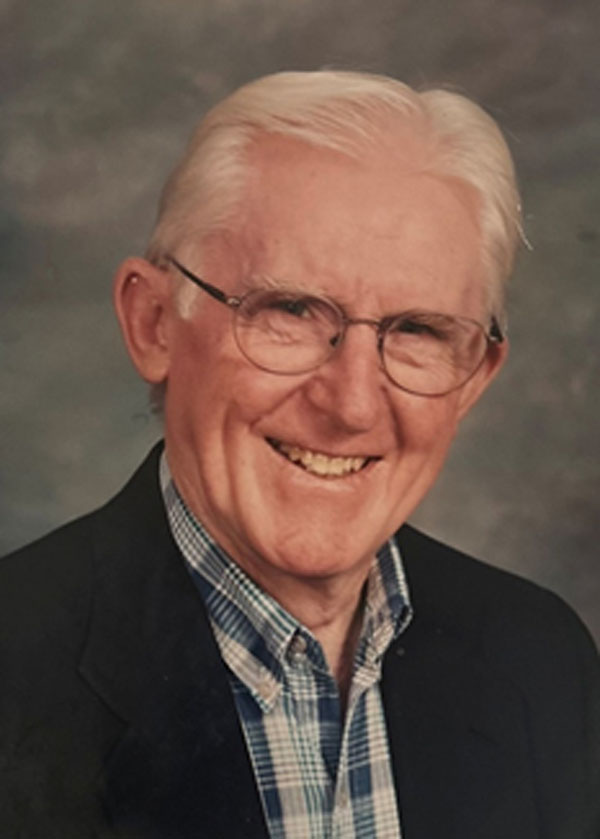
Burl Harmon was born in California, Missouri to Los Donald Harmon and Clara Estelle Christian Harmon, and grew up in Boone, Iowa.
He was preceded in death by his parents, first wife, Frances Kinkaid, and son, Daniel, who passed at 61 years of age. He is survived by his loving wife, Nanette Davis, daughter, Nancy Harmon, and Daniel's daughter, Sara Harmon.
Burl died of natural causes, acute blood loss anemia.
As a precocious child, Burl helped on the family farm with his uncles' Bert and Howard Harmon (both deceased) and learned carpentry and mechanics as well as having a penchant for reading and music.
He often reminisced about building a crystal radio from scrap parts, although having to wait until nighttime to crawl in bed, pull the sheets over his head and excitedly listen to various radio shows, invariably concerned that the sound from the set would awaken baby sister, Pansy, or his doting Aunt Jane.
At age 14, he credits his stern, oftentimes overly strict mother, for allowing music inside the cozy home when two young, charming gents selling a basic flattop guitar, lessons included, came to the door.
To his surprise Burl's mother could see the sparkle in his teenage eyes and agreed to let him keep the shiny, six-string friend.
Over the next 85 years, Burl, in his leisure time, played one of his numerous guitars, lap steels or ukuleles ~ and sang to rapt audiences in towns, cities, churches and homes…in several cities and states.
In 1943, Burl was drafted into the US Army to serve as a flight technician during WWII.
At 97 years old, Burl published an awarding-winning book on his military experiences, “Combat Missions,” putting into writing stories he had regaled students and friends with all his life.
After his military duty, Burl was accepted into Ottawa University in Ottawa, KS. There, he met his first wife, Frances Kingcade, and they married in 1949, both taking up teaching positions in Isabel KS.
He later earned a master's degree at Colorado State University.
Burl took his last flight on 19 January 2026 just before his 102nd birthday.
|
Information courtesy of Burl Harmon
Book Information - Combat Missions printed by BookBaby Publishers. ISBN 978-1-66785-696-4
Veterans Voices of Contra Costa Interview
|